
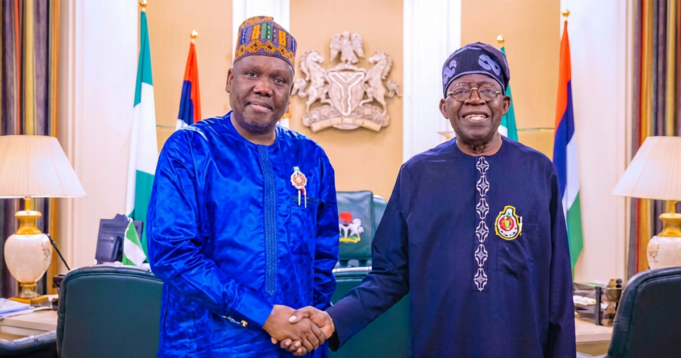
President Tinubu’s Special Adviser on Policy Communication, Daniel Bwala, has pointed to the International Monetary Fund’s latest World Economic Outlook as evidence that Nigeria’s economy is on an upward trajectory, outpacing several of the world’s major economies in projected growth for 2026.
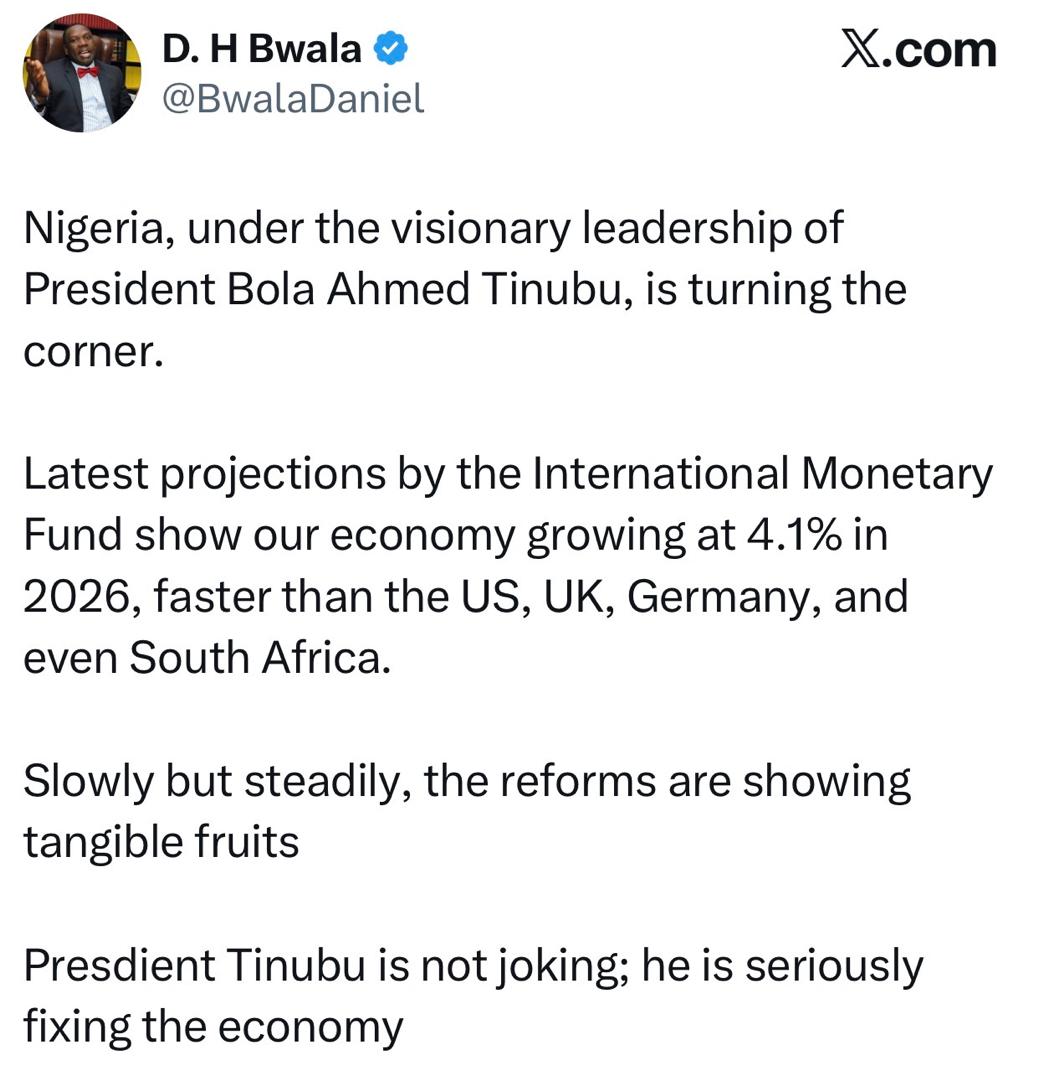
Bwala made the claim on his X account on Wednesday while reacting to the IMF report, which was released in April 2026. In his post, he credited the improvement to the reforms being implemented under President Bola Ahmed Tinubu’s administration, saying the results are beginning to show even if the process has been difficult.
“Nigeria, under the visionary leadership of President Bola Ahmed Tinubu, is turning the corner. Slowly but steadily, the reforms are showing tangible fruits. President Tinubu is not joking; he is seriously fixing the economy,” he wrote.
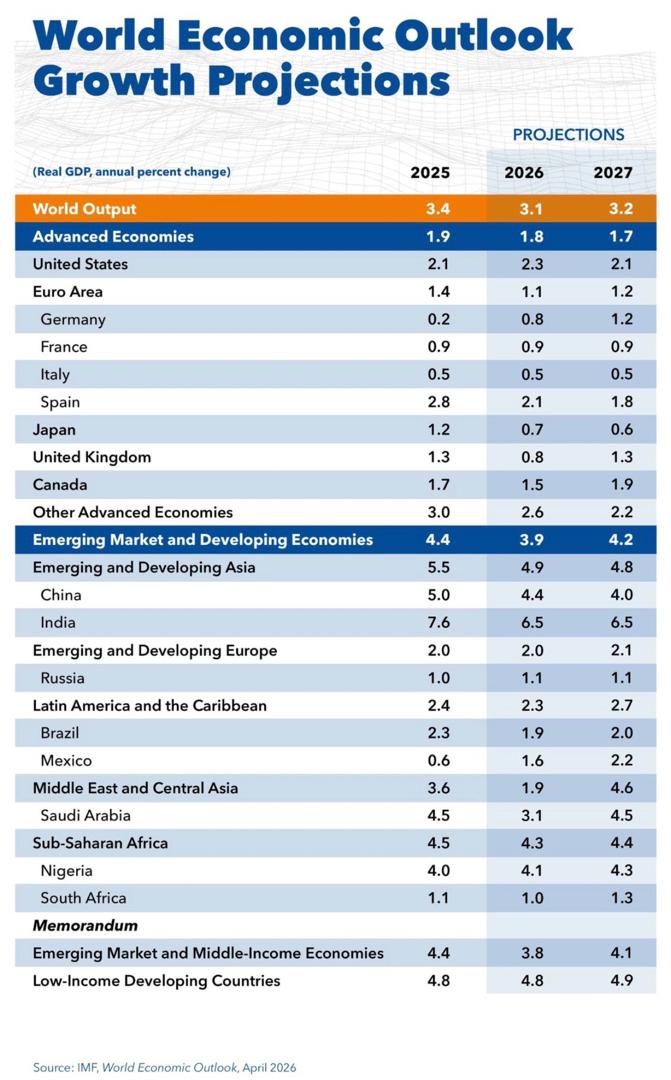
The IMF figures he referenced do support his headline comparison. According to the World Economic Outlook, Nigeria’s real GDP is projected to grow at 4.1% in 2026, which does place it ahead of the United States at 2.3%, the United Kingdom at 0.8%, Germany at 0.8%, and South Africa at 1.0%. The projection improves further to 4.3% in 2027, putting Nigeria in line with the broader Sub-Saharan Africa regional average for that year.
However, the full picture from the same IMF table offers some context worth noting. Nigeria’s 4.1% growth projection, while higher than those western economies, sits within a Sub-Saharan Africa regional average of 4.3% for 2026, meaning it is not leading the pack within its own region. India is projected at 6.5%, and several other emerging and developing economies are forecast to grow at comparable or faster rates.
Bwala’s post has drawn predictable reactions online, with supporters pointing to the numbers as validation of the administration’s economic direction, while critics argue that GDP growth figures tell only part of the story for ordinary Nigerians still contending with the cost of living, inflation, and the lingering effects of subsidy removal and currency devaluation.
The IMF report was sourced from the organisation’s World Economic Outlook published in April 2026.